
Reclaim Property Buried Under Overgrowth
Brush Clearing in Jackson for properties overtaken by saplings, dense weeds, and unmanaged vegetation
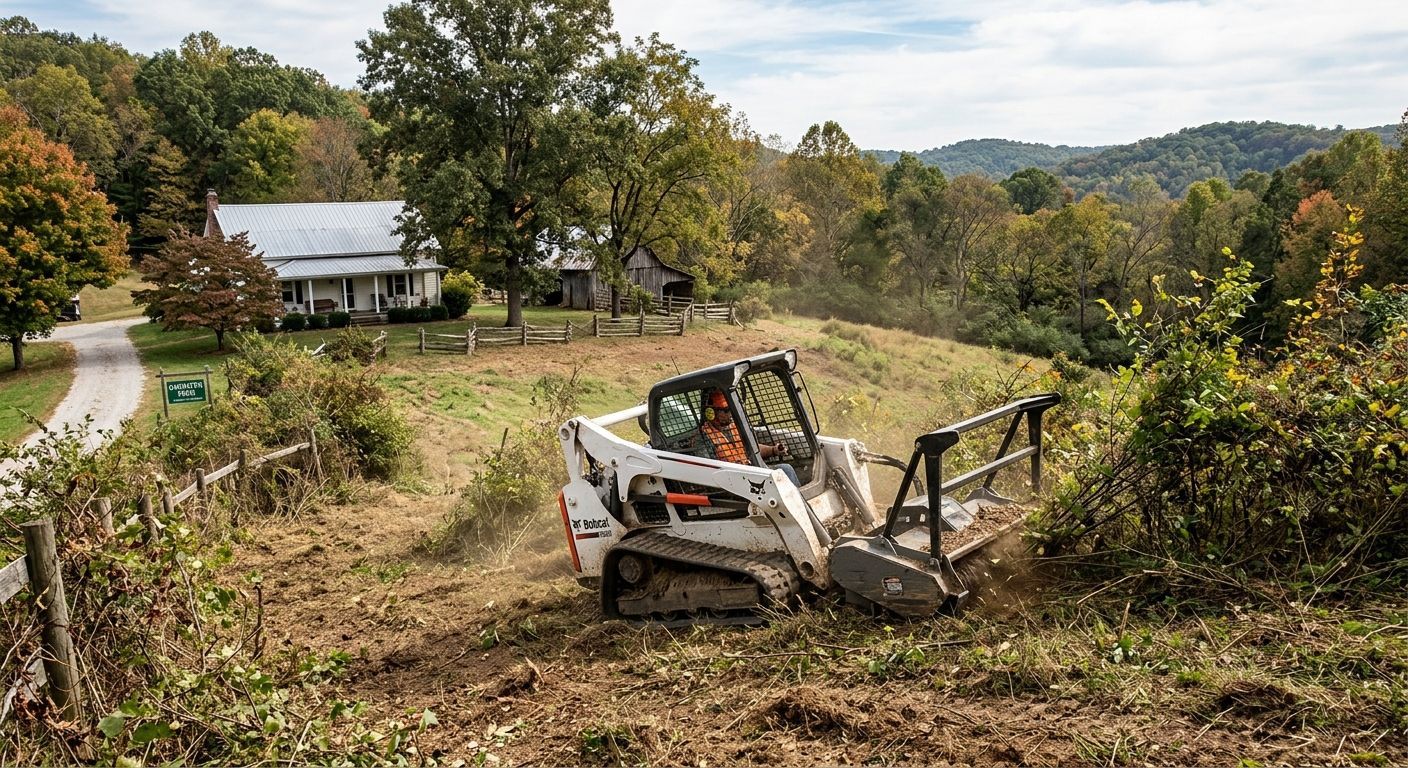
Eastern Kentucky's rolling terrain and abundant rainfall create ideal conditions for unchecked vegetation that can overtake pastures, old home sites, and field edges in just a few growing seasons. Saddle Ridge provides Brush Clearing throughout Jackson, West Liberty, Paintsville, and the surrounding region, removing dense saplings, briars, tall weeds, and thick undergrowth that limit how you use your land. Once the vegetation is cut back and removed, you'll see clear boundaries again, recognize terrain features you forgot existed, and regain access to areas that were previously impassable.
This service targets the woody stems, fast-growing saplings, and tangled undergrowth that standard mowing equipment can't handle. The process exposes usable ground, reveals property lines, and prepares areas for routine maintenance or future development. In wooded rural properties common to this region, brush clearing often uncovers old fence lines, drainage paths, and natural features hidden under years of growth.
Schedule a property evaluation to identify vegetation density, terrain access, and the finished condition you're working toward.
What Proper Brush Clearing Requires
The work begins with assessing vegetation type, stem diameter, root structure, and terrain slope to determine the appropriate equipment and approach. Saplings with established root systems require different cutting methods than seasonal weeds or low brush, and steep or wet ground affects how machinery moves across the site. Saddle Ridge evaluates access points, identifies any obstacles like buried stone or old infrastructure, and plans the clearing sequence to protect desirable trees or structures while removing unwanted growth.
After clearing is complete, you'll notice open sightlines across the property, easier movement through previously blocked areas, and exposed ground that's ready for mowing, planting, or additional site preparation. The absence of dense vegetation also improves air circulation and sunlight penetration, which discourages the same overgrowth from returning as quickly. Depending on your goals, the cleared material can be hauled away, piled for burning where permitted, or chipped and spread as ground cover.
Brush clearing is not the same as full land clearing or grading, and it doesn't address subsurface roots or stumps unless those services are requested separately. The focus remains on removing standing vegetation and restoring visibility and access. If you plan to maintain the area with standard mowing equipment afterward, clearing removes the obstacles that would damage blades or bog down smaller machines.
What Property Owners Usually Ask
Understanding what brush clearing involves and how it fits into your property maintenance or improvement plans helps set realistic expectations before work begins.
Saddle Ridge works with property owners across Jackson and the surrounding region to restore access and visibility on overgrown land. Describe your property size, vegetation type, terrain access, and the finished condition you're aiming for to begin planning the clearing work.
What types of vegetation can brush clearing remove?
The service handles saplings, briars, thick weeds, volunteer growth, and undergrowth too dense for mowing equipment, though larger trees or stumps require separate clearing methods.
How does terrain in Jackson affect the clearing process?
Steep slopes, wet ground, and rocky soil common throughout Eastern Kentucky influence equipment selection and may require staging the work to protect soil stability during heavy rain periods.
What happens to the cleared material?
Depending on site access and your preferences, the vegetation can be hauled off-site, piled for disposal, or processed on-site where conditions allow.
When should I schedule brush clearing?
Late fall through early spring is often ideal because vegetation is dormant, ground conditions are firmer, and regrowth is slower, though timing depends on your project schedule and weather patterns.
How do I prepare the property before clearing begins?
Mark any boundary lines, desirable trees, or features you want protected, and identify access routes that heavy equipment can use without damaging structures or utilities.