
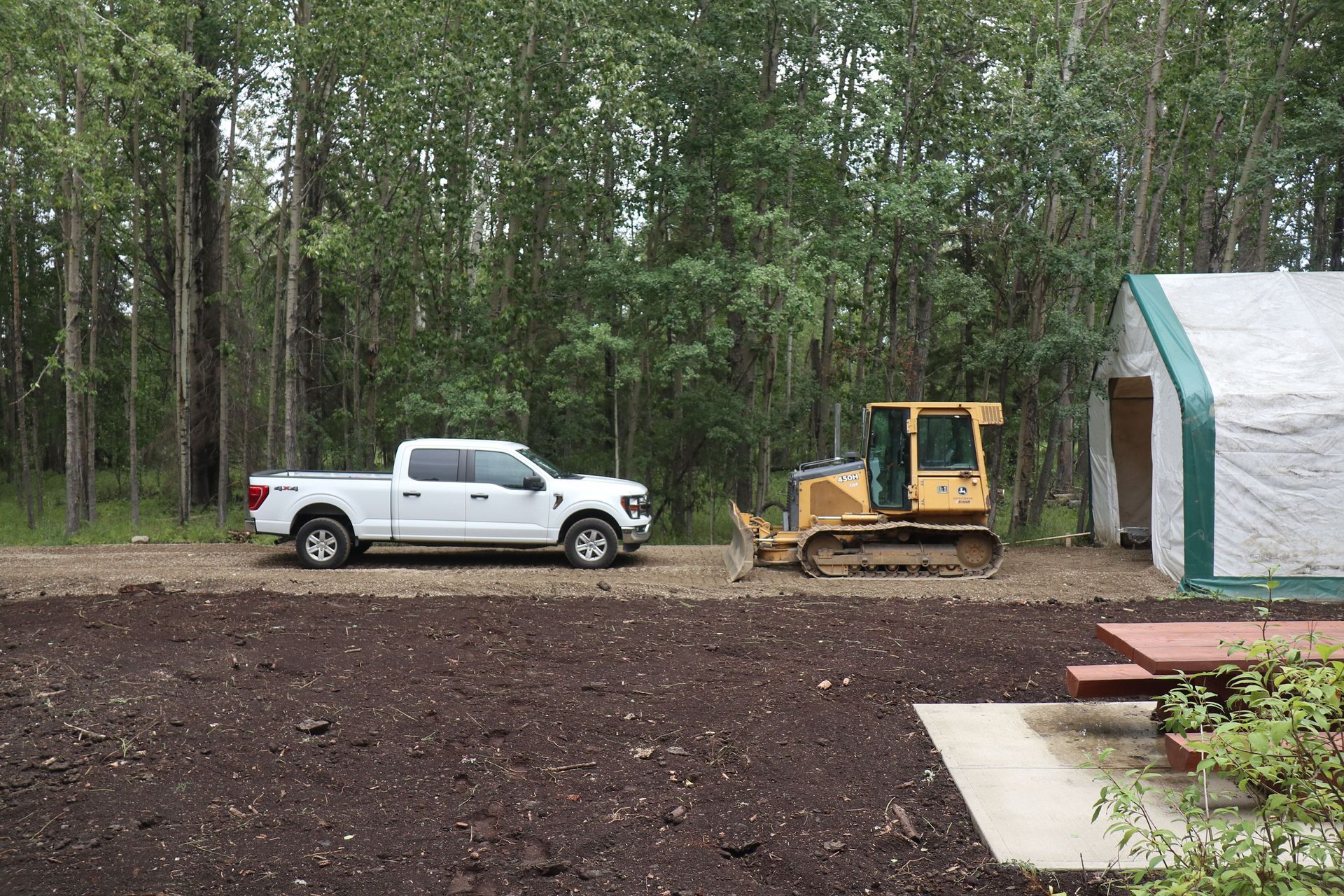
Undeveloped Property Turned Construction-Ready
Site Prep in Jackson for properties transitioning from wooded or unused ground to prepared building sites
Site preparation turns wooded, overgrown, or poorly draining property into ground that supports construction, access, and long-term use. The work combines clearing vegetation, excavating to establish proper elevations, grading for drainage, and managing material movement so the site is ready for the next phase. Saddle Ridge handles site prep across Jackson, Stanton, West Liberty, and surrounding areas where steep wooded lots, limited access, and variable soil conditions require coordinated planning before construction or property improvements can proceed. You see the result in clear work areas, stable access routes, and ground that manages water predictably.
Site prep involves multiple tasks that work together: clearing removes obstacles and fire hazards, excavation shapes the ground to required elevations, grading directs water away from structures, and hauling keeps the site orderly. Each task addresses a specific barrier to using the property, and the sequence depends on existing conditions, access limitations, and what the finished site needs to support.
Discuss your site's current condition and intended end use with Saddle Ridge to plan preparation requirements.
Why Site Prep Happens Before Construction Begins
Preparing a site before construction starts eliminates delays, access conflicts, and drainage failures that would otherwise disrupt the project. Clearing exposes the ground so engineers can evaluate soil stability and drainage patterns, excavation establishes building pad elevations and access routes, and grading ensures stormwater moves off-site rather than pooling near foundations. Eastern Kentucky's terrain often requires balancing cuts and fills to avoid excessive material hauling while maintaining stable slopes that won't erode once vegetation is removed.
After site prep is complete, the property transitions from unusable to functional. Trees, brush, and stumps are gone, building areas sit level and drain properly, and access routes support heavy equipment and material deliveries. Construction crews can begin foundation work without clearing obstacles, drainage problems are addressed before they affect structures, and the site matches the layout shown in project plans.
Some projects require only light clearing and rough grading, while others involve extensive excavation, drainage planning, and material hauling. The approach depends on vegetation density, slope severity, access challenges, and whether the site will support residential construction, commercial development, or infrastructure installation. Site prep also includes relocating or hauling soil, stumps, and debris that would interfere with construction equipment or create safety hazards.
Common Questions About This Service
Property owners preparing undeveloped land ask specific questions about the process and what the work includes.
Saddle Ridge coordinates clearing, excavation, grading, and material management to prepare sites for construction and property improvements. Arrange a site consultation by calling (606) 610-8667 to review your property's current condition and preparation needs.
What does site prep include for a residential building lot?
Site prep combines clearing all vegetation within the construction footprint, excavating to create a level building pad, grading to establish drainage paths, and hauling debris off-site. The goal is a clean, stable site ready for foundation work and construction activity.
How does site prep address drainage on sloped properties?
Grading during site prep shapes the ground to direct runoff away from building areas and toward natural drainage paths or retention areas. On steep lots around Jackson, this often requires multiple grade transitions and berms to slow water movement and prevent erosion.
When should site prep be scheduled for a new home or driveway?
Schedule site prep before any construction, utility installation, or driveway grading begins. Completing preparation first avoids damaging finished work, reduces project delays, and ensures equipment has safe access to all work areas.
What happens to material removed during clearing and excavation?
Stumps, brush, and excess soil are either relocated to areas where they won't interfere with construction or hauled off-site. Leaving material scattered across the site creates access problems, attracts pests, and complicates later work.
How do wooded lots and limited access affect site prep?
Dense tree cover requires full clearing before excavation and grading can begin. Narrow access roads limit equipment size and may require temporary access routes to reach the site. Both factors affect project duration and planning around Jackson's terrain.